Fewer Tools, More Stories
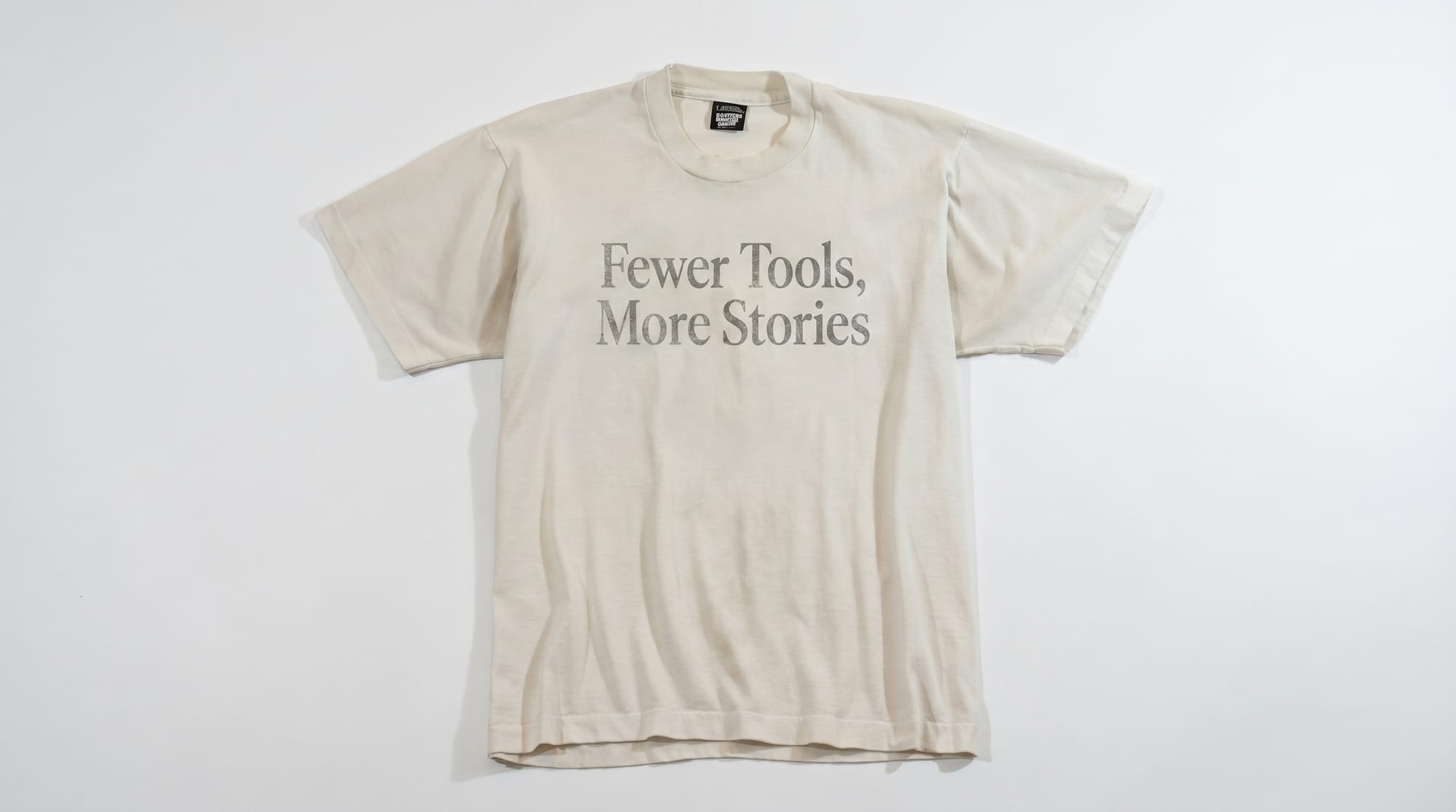
We rarely see how a publication begins.
What reaches us is the finished version: a clean page, a few carefully chosen images, a well-written story, and perhaps a subscription box waiting quietly at the end.
For years, however, there was a different reality behind the screen.
A content management system.
An email platform.
A membership tool.
A payment provider.
An analytics dashboard.
And dozens of small solutions connecting them all together.
As digital publishing grew, the work of publishing often became the work of managing systems.
Today, a different trend is emerging.
Particularly among independent publishers.
Using fewer tools instead of more.
Adding less instead of adding everything.
And perhaps most importantly, spending less time thinking about technology.
The Invisible Side of Publishing
Great publications are rarely remembered for their technical infrastructure.
What stays with a reader after finishing an article is not the platform behind it.
It is an idea.
A sentence.
A photograph.
Sometimes just a feeling.
This is why many publishers have begun rethinking the tools they use.
The question is no longer, “What else can we add?”
It has become, “What can we remove?”
Part of Ghost’s growing appeal comes from its answer to that question.
The platform brings together the essential components of modern publishing in one place. Content management, email newsletters, memberships, subscriptions, and audience relationships all exist within the same ecosystem.
On paper, that sounds like a technical advantage.
In reality, it feels more like a cultural shift.
Because fewer systems often mean fewer distractions.
Design Is Not an Interface. It Is an Atmosphere.
The best design often goes unnoticed.
Much like good architecture.
When people feel comfortable in a space, they rarely stop to analyze why.
Publishing works in a similar way.
When the reading experience feels effortless, the design becomes invisible.
Only the story remains.
For independent publishers, choosing a theme is therefore not simply a visual decision.
It is a decision about character.
This is where Studio Mitsun's premium Ghost themes stand out.
Rather than relying on visual excess, they focus on typography, clarity, and breathing space.
Instead of competing for attention, they create environments where content can take center stage.
The approach resonates particularly well with digital magazines, independent media brands, newsletters, and membership-based publications.
Because today, people do not necessarily need more design.
They need better design.
The Return of Direct Relationships
For a long time, the internet belonged to intermediaries.
Platforms shaped the relationship between publishers and readers.
Algorithms decided what would be seen.
Follower counts, impressions, and reach became the dominant metrics.
Today, many publishers are returning to an older idea.
Direct relationships.
A reader subscribing to a newsletter.
Looking forward to the next issue.
Following a publication because they value its perspective.
Ghost's built-in membership and newsletter infrastructure was designed with this shift in mind.
Because growth is not always about reaching more people.
Sometimes it is about building stronger connections with the people who are already there.
A Calmer Future for Publishing
Technology is constantly obsessed with speed.
Faster platforms.
Faster production.
Faster growth.
Publishing, however, seems to be moving in a different direction.
Writing more carefully.
Creating stories that last longer.
Building stronger communities.
And making technology almost invisible in the process.
Perhaps that is why Ghost has become more than a CMS for many independent publishers.
It has become part of a different way of working.
When paired with premium themes from design-focused studios such as Studio Mitsun, the result is more than a functional publication.
It becomes a publication with its own rhythm.
Quieter.
More focused.
And a little closer to its readers.